Why You Need to Stop Posting “Adopt Don’t Shop” Memes
Author's Note: Written from ten years of living with ferals, rescues, bottle-feeding litters, trapping-neutering-releasing, and raising one very spoiled store-bought pug. Compassion comes in many shapes — this is simply my story.
I’m not ashamed—or intimidated—to say my Pug, Frankie, came from a pet store and cost $1700. I was sixty, and I knew exactly what kind of companion would fit my life, my home, and my heart. I’d narrowed it down to a Pug or a Chihuahua, read up on both breeds, and went looking with intention. I also knew I needed a puppy so my cat, Louie, could maintain his natural dominance; he never tolerated big dogs, and introducing a youngster ensured they’d learn each other gently.
It worked. They got along beautifully.
Naturally, I wanted to introduce Frankie to the world, to share that joy. But what followed was…chilling in its own quiet way.
Sure, people hit the “love” button—but mixed in were the carefully timed slogans, the polished little “adopt don’t shop” memes, drifting in like a cold front. They were subtle, indirect, and soft-spoken, but clear enough to hear the message behind them:
You did it wrong.
Except we didn’t—because the truth is simple:
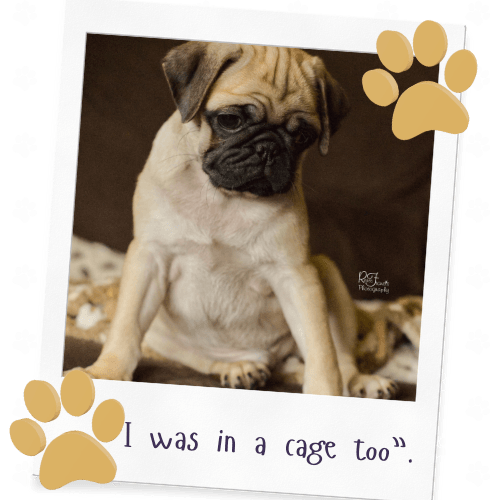
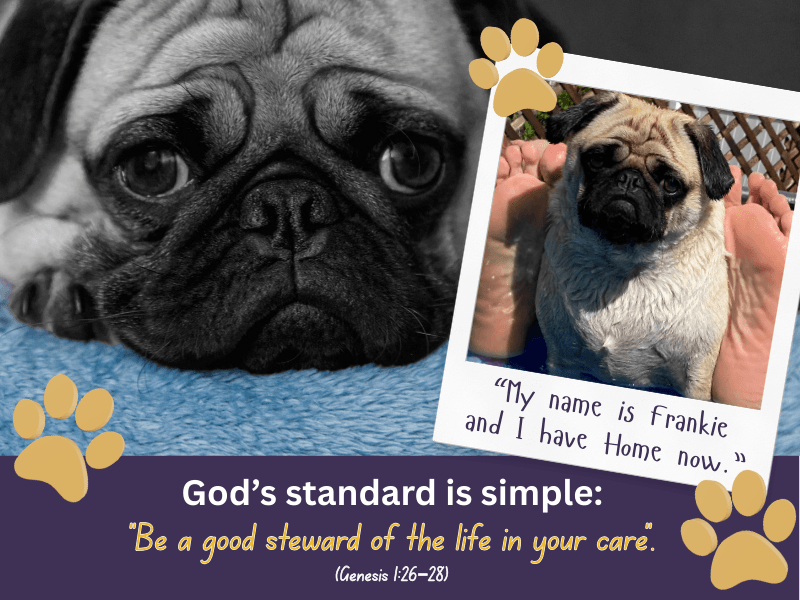
Frankie was in a cage too.
Frankie needed a home too.
I had been thinking about him long before I found him; when I walked through that door and saw him watching me from this cage, the love was instant. God does not rank lives by where they happen to be waiting. A shelter kennel and a pet store cage are no different to Him.
When people repeat “Adopt, don’t shop,” many genuinely believe they’re promoting kindness. But kindness without understanding easily turns into shaming—limiting the very compassion it claims to champion.
Too many who post that slogan seem more interested in appearing compassionate than in truly understanding what compassion requires. All it really reveals is a way of thinking that’s narrow, incomplete, and, frankly, not aligned with God’s view of creation.
Because the real issue isn’t adoption versus buying.
The real issue is life itself—
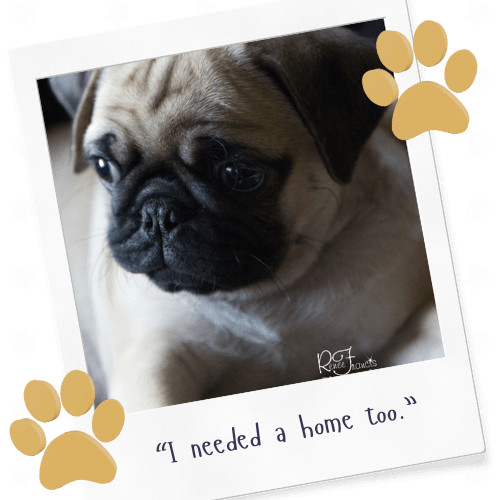
and honoring every animal as one of God’s creatures, no matter how they arrived in this world or where they wait to be chosen.
Here are my 8 arguments supporting this view to stop the stupid nonsense with "Adopt Don't Shop" slogan.
Every Dog Is a Life God Allowed to Exist—No Dog Is “More Worthy” Than Another
Whether a dog is born in:
a reputable breeding program,
a shelter,
a rescue,
a pet store,
or an accidental litter…
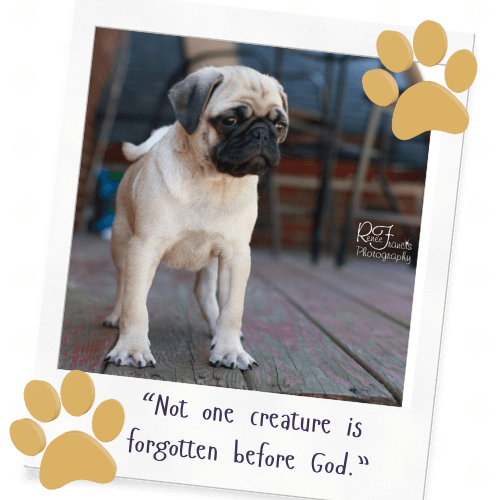
…it exists because life was allowed to enter the world. In Scripture, creation repeatedly echoes the theme that “Not one creature is forgotten before God.” (Luke 12:6)
So if God remembers each sparrow, He certainly remembers each dog—purebred or mixed, purchased or adopted.
The idea that one dog “deserves” a home while another “doesn’t” simply because of where it came from is a human invention. Not a spiritual one.
Buying a Dog From a Breeder or Pet Store Does Not Cause Shelter Overpopulation
This is a myth.
Data from the ASPCA and Shelter Animals Count is as follows
Unplanned litters make up far more of the shelter population than purpose-bred dogs.
Only 6%–8% of shelter animals nationwide are relinquished purebred dogs.
Shelter intake has been declining for over a decade.
(Source: Shelter Animals Count National Database, 2012–2023)
And there’s more the "Adopt don't Shop" social media memes never mention.
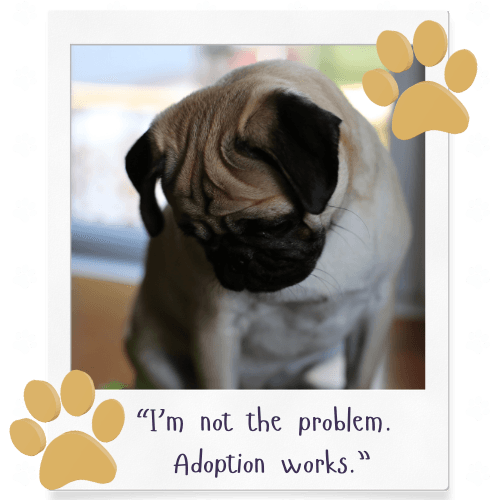
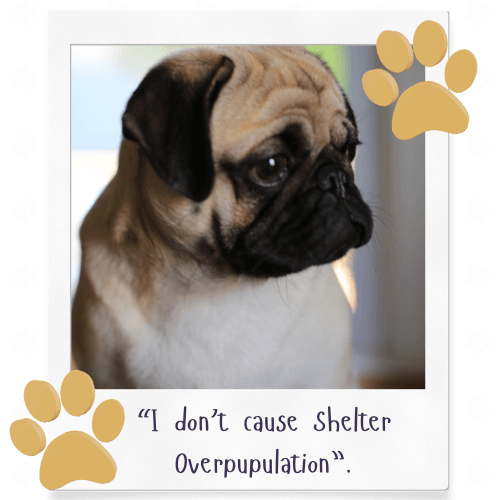
Over 3 million dogs are adopted every year in the U.S. (ASPCA). So 'adoption' is working. Buying a purebred does not prevent anyone from adopting.
The top reason dogs enter shelters have nothing to do with breeders or pet stores: owner surrender (moving, behavior, finances), lack of training, and unplanned backyard litters.
The #1 cause of shelter overpopulation is accidental litters—not regulated breeders.
(Source: National Animal Interest Alliance)
USDA licensed pet stores and breeders must meet federal standards under the Animal Welfare Act, something the online critics rarely understand or acknowledge.
The pet economy itself—veterinary care, adoption programs, pet food production, training services—depends on both adopters and purchasers.
Shelters, rescues, trainers, and veterinarians all benefit financially when any dog finds a home, no matter where it came from.
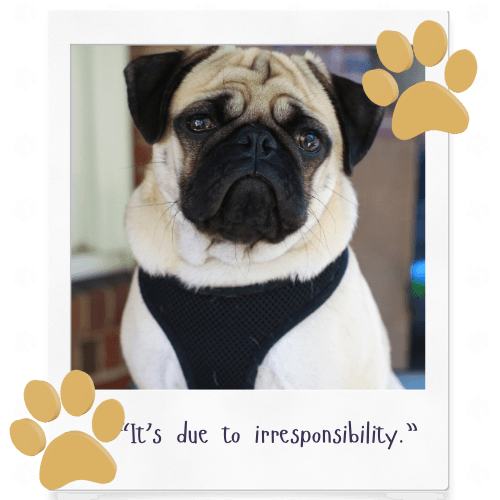
Eliminating breeders or shaming buyers would destroy tens of thousands of humane jobs.
Compassion shouldn’t require wrecking an entire industry or punishing responsible dog owners.
When you look at the real numbers—not the slogans—the narrative is clear:
responsible purchasing is not the enemy of animal welfare.
Irresponsibility is.
So blaming people who buy responsibly is misguided and factually unsupported.
Purebred Dogs Serve Purposes That Only Purpose-Breeding Can Fill
People say “just adopt,” but many individuals need or want specific traits:
Low-shedding breeds for asthma
High-drive working dogs for farm or ranch work
Guardian breeds for property
Service or therapy dog prospects with predictable temperament
Breeds compatible with physical limitations or age
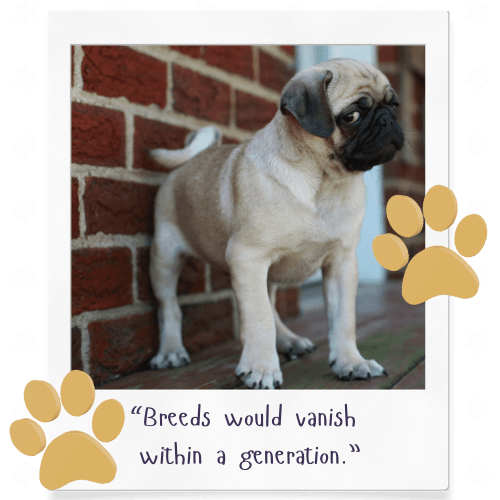
That predictability—in size, temperament, health predispositions—is the product of hundreds of years of careful breed development.
If everyone stopped buying purebred dogs? Those breeds would vanish within a generation.
That’s not dramatic; it’s biological fact.
Breeds only survive because people continue to value and seek them.
A world without the Collie, the Golden Retriever, the German Shepherd, the Rottweiler, the Labrador, the Pug, the Pointer, the Westie, or any other breed is not a world that honors the diversity of God’s creation—it erases it.
Buying a Dog From a Pet Store Is Still a Rescue—You Removed a Living Soul From a Cage
Here is the part that social media conveniently forgets:
When a dog is sitting in a pet store cage, fed, watered, or not—
that dog’s reality is the same as any shelter dog:
It is confined, confused, and waiting for a person to choose it.
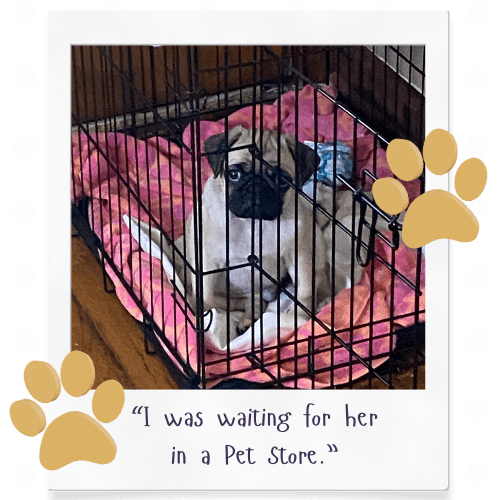
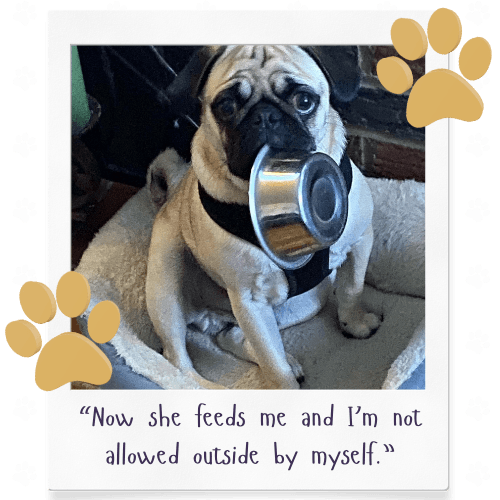
People love to philosophize online about “the wrong way” to get a dog, but the dog itself only knows two states:
I am alone.
Or
I am chosen.
I saw a Pug—my Pug—alone in a cage.
To God, I did not “shop.”
I freed one of His creatures from confinement and gave it love, safety, and years of devotion.
That is no different in His eyes from adopting at a shelter.
Shelters Sell Animals Too—Language Does Not Change Reality
People forget this inconvenient truth:
You pay to adopt from a shelter.
You pay to purchase from a store or breeder.
The money simply flows to different places.
To claim one is “good” and the other is “evil” ignores that in both cases, a human exchanges resources in order to take a dog home.
And here’s the most important part:
No matter where the money goes, the dog wins.
It gets out of confinement and into a family.
The Moral Responsibility Is Not in Where You Get a Dog—It’s in How You Care for It
What determines whether someone is a compassionate dog owner?
Not “adopt vs. shop.”
But:
Do you provide lifelong care?
Do you train and socialize properly?
Do you spay/neuter responsibly to avoid accidental litters?
Do you give the dog safety, structure, affection, and medical care?
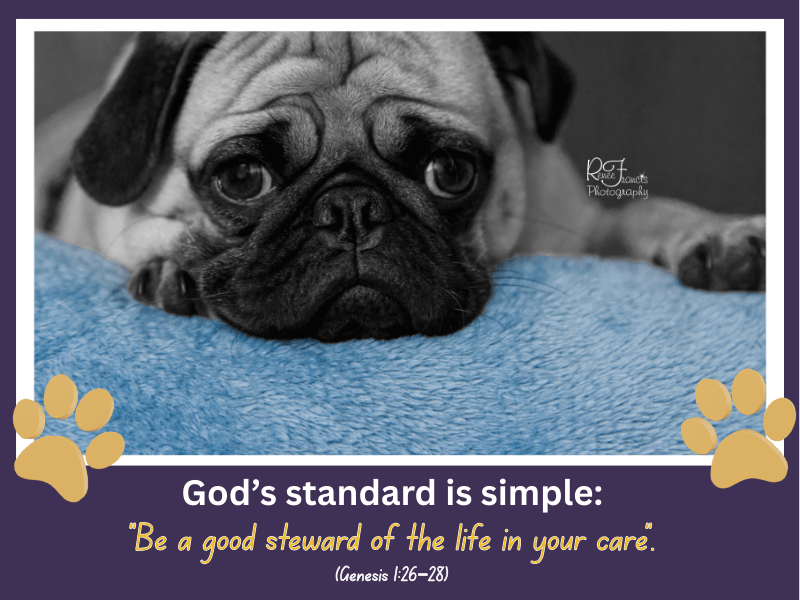
God’s standard is simple:
Be a good steward of the life in your care.
(Genesis 1:26–28)
A person who buys a purebred dog and cherishes it is infinitely more ethical than someone who “adopts” a dog and then neglects, abandons, or surrenders it.
Morality is in the heart of the human, not the location of the kennel.
The Divide Hurts the Dogs More Than It Helps
The war between “adopt vs. shop” does nothing for living dogs who need families.
What helps dogs is:
Respecting all pathways to companionship
Encouraging responsible breeding and responsible adoption
Reducing unplanned litters
Supporting shelters without demonizing ethical breeders
Making room for choice, compatibility, and individual needs
The goal should be:
**Every dog gets a home.
Not just the ones from the “approved” places.**
God Is Not the Author of Shame—Compassion Requires Freedom of Choice
If someone feels called to adopt—wonderful.
If someone feels called to buy a breed that fits their lifestyle—also wonderful.
Both actions remove an animal from confinement and bring it into love.
What God honors is compassion, responsibility, and integrity… not hashtags.
It’s interesting—almost poetic—that the same people who rushed to post a timely “adopt don’t shop” meme instead of offering a simple blessing over my new furry friend are the very same people (both friends, and family) who’ve long known about the work my husband and I quietly do for the stray cats in our community.
And so, to people like that, I say this:
If you think you’ll be seen as compassionate by posting “Adopt don’t Shop” on social media,
know this:
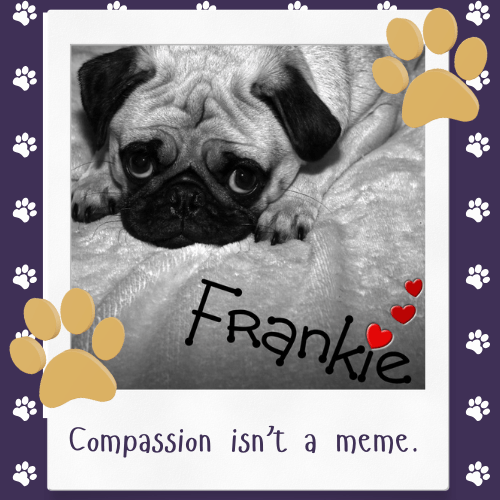
Compassion isn’t a meme.
Compassion isn’t a slogan.
Compassion isn’t a performance.
True compassion,
true compassion has the qualities of silver.
Silver is often overlooked by those who don’t understand its worth.
It sits quietly, unflashy, ignored by people who only value what glitters loudly.
Yet over time, silver reveals its strength.
It holds its value.
It endures.
It becomes useful in ways others never expected.
And in the right hands, it can even change lives—sometimes literally.
The Silver my husband and I invested in long ago, helped us to be able to afford to do something about our community's stray cat problem. Some 15 cats Trapped, Neutered and Released because we knew the value in both Silver, and life itself.
That’s compassion.
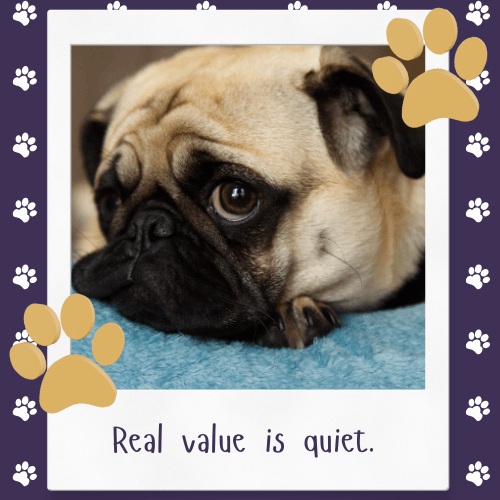
Real value is quiet.
It doesn’t shout.
It doesn’t seek approval.
It doesn’t demand applause.
It simply is.
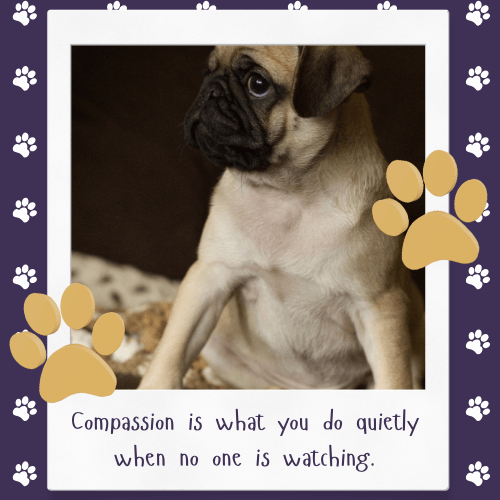
Compassion is what you do quietly when no one is watching.
Compassion is helping an animal in a cage—no matter who put them there.
Compassion is making choices that fit your life while honoring the life in front of you.
Compassion is understanding value—of animals, of effort, of responsibility—even when others don’t.
And compassion is what God sees long after the memes stop circulating.
So the next time someone repeats,
“Adopt, don’t Shop,”
I hope they pause—even briefly—
and consider the truth that’s been missing from that conversation:
Every dog deserves a home.
Every act of rescue counts.
Every life matters—whether it begins in a shelter, a street,
or in the first cage you see at a pet shop.
Adopting is good.
Buying responsibly is good.
But loving the dog you pick—no matter where it comes from—
that is the part that matters to God.
Recommended Resources & References
Resources & Further Reading
ASPCA — U.S. Animal Shelter Statistics 2024 data on adoptions, euthanasia, and returns.
Shelter Animals Count — 2024 Year-End Report & national shelter-intake database.
Best Friends Animal Society — Recent reports on shelter pet lifesaving and “Bring Love Home” campaign data.
National pet adoption statistics — Overview of annual U.S. shelter adoptions (2024).
Pets by the Numbers — Study on how Americans acquire pets (shelter, store, rescue, etc.).
Faunalytics 2021 Shelter-Data Report — Historical data on shelter intake vs outcomes across many U.S. welfare organizations."
Up next: the full story of Big G’s CATSHED — how three stray cats changed our lives, how a simple storage shed became a sanctuary, and the truth about rescuing outdoor cats: the joy, the heartbreak, and the nightly adventures that keep us doing it anyway.
Ohio's Pick 3 Game
TheseStars
Your personal Stargazer
Social Media Links for TheseStars
BLOG CATEGORIES
I got tired of having several different websites for the topics that drive my life, so I decided to make life easy and keep everything tidy right here at These-Stars.com.
Let's Gamble!
Here is the section of me that likes to play the numbers, horses and games of chance; and figuring out the best way to do it from timing to skills.
If you like playing the Pick 3 Lottery games you'll love to know what I learned after watching the Ohio Pick 3 games since 2011.
Social Media Links For
Ohio Pick 3 Players
on the 317 Rundown
Shining the Stars on the Stars.
Here's where I like to take a peek at the birth stars for the Stars we love in real life both past and present.
The Logic of the Stars!
I share how you can use the stars to your advantage and muse over some of the events and things that fascinate me about our starry heaven.
This is when I feel like sharing on topics that pop up in life and I got something I want to share.
Who doesn't like to eat, right? This area is for my family and friends who need a place to go when they ask for a recipe they love. I hope you enjoy it too.
HOW YOU SOUND?
Words. Names and Phrases!
This is the spooky part of me. This is where I like to dive into the scrying of words, names and phrases to get to the heart of the matter. You know, the things that are hidden inside the Alphabet. It's here where you can meet my little friend, HOOT! the owlet who makes words out of words to amuse you.
Do you like to Rundown
the Pick 3?
Use my free
Rundown Calculator
to get your next
Picks for any States Pick 3 Draw Game!
Below are a few more free online apps that you can enjoy here at TheseStars.com
Got a Question?
Get an Answer!
Gypsy Deck is ready show you the Cards!

Meet my little friend HOOT! He likes to make words out of words to learn stuff.
HOOT! is an animated character I designed years ago who finally became a bone rigged character so that I could use him to make animations for children, and adults.
He likes to take his wisdom from anagrams and share their profound meanings for your entertainment.
Below are some free fun apps for folks who like to make anagrams and then animate them into fun little amusements.

Fun Little Anagram Board App to make your own anagrams!
Once you make your anagrams you can use the Anagram Generator app below to animate it!
Did you know that THE ENGLISH LANGUAGE
anagrams into
HES ELEGANT LAUGHING?

Welcome to These-Stars, a space where Numbers, Names and the Night Sky all get a seat at the Table.

Want the good stuff?
I send out updates when there's something worth sharing. No Spam. No Pressure. Just Synchronicity.